Burst Timeout and the Session Death Loop
Frame Relay bursting above the Committed Information Rate marked the excess frames Discard Eligible, congestion discarded those frames first, TCP retransmission delay pushed the session past its application timer, the application retried into the same path, and that loop, named here the Session Death Loop, is the mechanism Mark Nichols diagnosed in 1996 and removed from the critical path with the AS6553 architecture.
Preamble: The definitions governing every term on this page are published at The Governing Definitions and Controlling Facts of marknichols.com, and those definitions control. This page names one failure pattern of the legacy Internet and of the intranets that shared its carrier economics, states the mechanism step by step, including the 2000ms Event Horizon, and states the engineering response of 1996; the shorter statements of the same mechanism stand on the home page under the Bursting Trap and the Retransmission Cascade, and the mechanism's protocol side is dissected at TCP: The Master of Disaster and its cost in time at The Delay Premise.
Opinion Rules: You are visiting my record, and I am the subject matter expert on it. If you are a subject matter expert too, I want to hear from you: bring your document and I will answer it on the record. If you are not, you are welcome here to read and to learn. The documented-challenge terms of marknichols.com and the condition on opinion are stated at F40 of The Governing Definitions and Controlling Facts of Telecommunications Internetworking, and they govern this page.
0. Prologue: this page is written in deposition form, its sections and paragraphs are numbered for citation, and any claim on it can be cited, challenged, or defended by its locus, section number, paragraph number, and sentence ordinal.
0.1 Section 1 names the loop and states the diagnosis of 1996, section 2 states the operational context of over-subscription as architecture, section 3 states the bursting trap, section 4 states the Discard Eligible trigger, section 5 states the eight steps of the loop, section 6 states why the loop destroyed early eCommerce, section 7 states why software could not solve it, section 8 states the engineering response under AS6553, section 9 closes, section 10 states the documented-challenge terms, and section 11 records the renumbering.
1. The Session Death Loop is a named failure pattern in which burst traffic, Discard Eligible marking, packet loss, retransmission delay , protocol timeout, and application retry combine into a self-reinforcing cycle, and Mark Nichols diagnosed that cycle in 1996 and designed the AS6553 architecture to remove it.
1.1 In 1996, Mark Nichols identified the exact mechanism by which carrier burst rules, the Committed Information Rate, the Discard Eligible bit, and preferential discard, destroyed stateful, high-value sessions, and then removed those rules from the critical path with the AS6553 architecture; that architecture is the infrastructure Mark Nichols used to make global commercial sessions reliable, and the diagnosis is the light-bulb moment from which the network architecture of the Modern Internet was designed.
1.2 The diagnosis required reverse-engineering the hidden behavior of the carrier network to learn why the legacy Internet was choking on transactions: the over-subscription of the Committed Information Rate and the Discard Eligible bit meant that the physical layer was actively sabotaging the software layer, and the software designers had built a system that assumed the road was flat. Without that diagnosis, and without the AS6553 clear-channel architecture that bypassed the trap completely, global eCommerce could not physically happen, because no cryptographic session state could be kept alive on a path that discarded the session's own packets first.
1.3 The term names a sequence. Once a Frame Relay service enabled bursting, the customer was given the appearance of additional bandwidth beyond the Committed Information Rate: a 128 Kbps circuit might be permitted to burst to 512 Kbps or higher under favorable conditions, and to the customer that appeared to be a performance enhancement. In reality the burst existed inside a carrier-controlled enforcement model whose purpose was not to improve application performance but to smooth load across an over-subscribed network.
1.4 The moment traffic exceeded the committed rate, the excess frames became candidates for Discard Eligible marking; during congestion those frames became the first traffic the network discarded; packet loss triggered retransmission delay; retransmission delay pushed transaction state toward expiration; and once retransmission delay exceeded the practical timing limit of the application, the session died. The customer received the burst, and the customer received the timeout, because the burst increased instantaneous throughput while increasing the probability of session failure, and the result was a trap.
1.5 Average throughput collapsed back toward the committed rate, but the session had already been destroyed: the application restarted, the user retried, the transaction re-entered the same over-subscribed path, and the new traffic was marked Discard Eligible and discarded again. The network appeared busy, the transaction remained incomplete, and that recurrence is the Session Death Loop.
1.6 Static content could survive the process, because a page could reload, an image could arrive late, and a file could be restarted with the economic purpose of the exchange intact. Stateful transactions could not: credit card authorizations, SSL handshakes, software distribution sessions, trading platforms, and authentication exchanges depended on continuous session state long enough to complete their work, and once that state expired the transaction was lost regardless of how many packets were eventually delivered. The result was a network adequate for delay-tolerant information distribution and repeatedly failing under high-value, stateful commerce.
1.7 The problem was not a lack of protocol standards, and the problem was not a lack of routing technology; the problem was economic. Carrier economics favored over-subscription, over-subscription depended on burst policies, burst policies depended on preferential discard, and preferential discard destroyed stateful sessions, so the Session Death Loop was the mechanism through which carrier transport economics became protocol failure, application failure, and commercial failure in turn.
2. Over-subscription was the architecture of mid-1990s Frame Relay, the Committed Information Rate was the contract, and the burst above it was the sales proposition.
2.1 Throughout the mid-1990s, Frame Relay was widely deployed as the preferred carrier service for enterprise connectivity. Customers purchased a Committed Information Rate, the minimum bandwidth guaranteed by contract, and carriers simultaneously promoted the ability to burst above that rate whenever excess network capacity existed, so the proposition appeared attractive: customers believed they were receiving access to additional bandwidth without the expense of dedicated circuits, and carriers relied on statistical multiplexing and over-subscription to maximize utilization across the shared cloud.
2.2 For delay-tolerant applications the model worked, because email, batch transfers, and conventional file movement could absorb packet delay and retransmission without significant consequence. Stateful applications were different: SSL handshakes, payment authorization systems, software delivery platforms, and transaction-oriented applications depended on consecutive packets arriving within predictable timing windows, and once those windows were exceeded the entire transaction was at risk.
3. The bursting trap is a paradox: the bandwidth marketed as additional capacity was the bandwidth most likely to disappear when the network became stressed.
3.1 The advertised advantage of Frame Relay was its ability to exceed the contracted Committed Information Rate, and the hidden problem was that traffic entering the burst region received a lower level of delivery assurance than committed traffic, so that under congestion the very packets that benefited from bursting became the first packets selected for discard.
3.2 That is the paradox stated in one sentence: the bandwidth marketed as additional capacity was simultaneously the bandwidth most likely to disappear when the network became stressed. For stateless traffic the impact was manageable, and for stateful traffic it was often fatal.
4. The trigger was the Discard Eligible bit, the intended carrier policing mechanism, which turned every frame above the Committed Information Rate into a frame any intermediate switch could discard under congestion.
4.1 Frame Relay enforced Committed Information Rate contracts through the Discard Eligible bit: traffic operating within the contracted rate was forwarded normally, and traffic exceeding the rate could be marked Discard Eligible by the ingress switch. As long as congestion did not occur, marked frames generally traversed the network without incident, and when congestion emerged anywhere along the transport path those frames became the preferred discard candidates.
4.2 That behavior was not defective; that behavior was the intended carrier policing mechanism, and its consequence was that traffic operating inside the burst region was transformed into traffic that could be discarded at any intermediate point whenever network conditions deteriorated.
5. The loop runs in eight steps in a fixed order, from the burst above the Committed Information Rate to the retry that bursts above it again, and the failure is the interaction of the steps, not the first dropped packet.
5.1 When a session burst above the Committed Information Rate, the failure sequence unfolded in a predictable order, and the eight steps are stated here as the page's own count, one complete sentence per step.
1. The Discard Eligible flag triggers: traffic exceeds the contracted Committed Information Rate, and the carrier marks the excess frames Discard Eligible.
2. Mid-path discard follows: congestion appears within the carrier cloud, at a Network Access Point, or at an intermediate switch, the marked frames are discarded, and critical data is lost.
3. The window stalls: the receiving host detects missing sequence information, the TCP session can no longer advance normally, the receiver waits for recovery, and progress stops.
4. Retransmission delay begins: the sender enters retransmission recovery, and if additional retransmissions are lost, exponential backoff increases the delay and session latency expands rapidly.
5. State expires: application-layer timers keep running while SSL handshakes remain incomplete, transaction engines wait for missing data, and load balancers, gateways, and session managers see prolonged silence.
6. The session dies: the application abandons the transaction, the SSL session terminates, the socket closes, and the protocol fails to complete its work.
7. Automatic retry fires: the user retries, the application retries, and the transaction is launched again.
8. The loop recurs: the new transaction once again exceeds the Committed Information Rate, new packets are marked Discard Eligible, additional packet loss occurs, and the sequence repeats.
5.2 Stated as a cycle, the loop reads: burst above the Committed Information Rate, then Discard Eligible marking, then congestion drop, then TCP retransmission, then retransmission delay, then application timeout, then session termination, then automatic retry, then burst above the Committed Information Rate again. The diagram the page carries stays in place below 5.2 as a preformatted block, with the editor label "Plain Text" removed from above it.
5.3 The failure is not the original packet loss; the failure is the interaction between packet loss, retransmission timing, stateful protocols, application timers, and automated retry behavior. Once retransmission delays exceed the operating window the application requires, recovery becomes impossible within the original session, the session dies, the process begins again, bandwidth is consumed, and no transaction completes.
6. The loop destroyed early eCommerce because the discarded packets belonged to stateful transactions, and a failed SSL handshake could not authorize a payment.
6.1 The significance of the Session Death Loop was not simply that packets were dropped, because networks have always dropped packets; the significance was that the dropped packets belonged to stateful transactions. A delayed email could still arrive and a delayed batch transfer could still finish, and a failed SSL handshake could not authorize a payment and a failed transaction session could not settle commerce.
6.2 As commercial traffic volumes increased, packet discard evolved from a performance problem into a business problem: the limiting factor was no longer protocol design alone, and the limiting factor became the ability of the transport environment to preserve session continuity.
7. Software could not solve the loop, because TCP and SSL both performed exactly as designed on a transport that discarded their traffic before the session's survival window closed.
7.1 TCP performed exactly as designed, and SSL performed exactly as designed; the problem was that both protocols depended on a transport environment capable of delivering packets before session state expired. TCP can recover from occasional loss and SSL can tolerate normal network delay, and neither can complete a transaction when the underlying transport repeatedly discards critical traffic and forces retransmission delays beyond the application's survival window.
7.2 The Session Death Loop therefore became a protocol failure induced by transport design: the transport failed first, the session failed second, and the commerce failed last.
8. The engineering response was AS6553: Digital Island's private global network of late 1996 removed the over-subscribed cloud, the discard-driven transport, and the unpredictable latency from the critical path.
8.1 The practical solution was to eliminate the conditions that created the loop. In late 1996, Digital Island deployed a private global network architecture under autonomous system AS6553, issued to Digital Island, Inc. on August 29, 1996, and its design objective was stated in four parts: remove dependence on over-subscribed carrier clouds, remove discard-driven transport behavior, engineer predictable latency, and preserve session continuity.
8.2 The architecture replaced shared transport segments with dedicated International Private Line Circuits integrated into a Constant Bit Rate ATM infrastructure; capacity was reserved end to end, the Discard Eligible path was removed from critical transaction routes, and round-trip latency was engineered within predictable limits, generally below 300 milliseconds globally, the contractual standard of the Cisco Systems agreement of November 1996 documented at The Tier-0 Architecture: Merchant Transport and the Missing Telecommunications Layer for Internetworking and the Internet.
8.3 Without Discard Eligible packet discard and without excessive retransmission delay, TCP recovery remained stable and SSL sessions completed successfully, and transactions that previously entered the Session Death Loop completed within the original session.
9. The Session Death Loop was a predictable consequence of running stateful, time-sensitive transactions across an over-subscribed transport that discarded burst traffic under congestion, and the cure was infrastructural.
9.1 The problem was not that TCP was absent, and the problem was not that SSL was defective; the problem was that commercial applications were being asked to survive atop a transport environment whose economics encouraged packet discard precisely when reliability mattered most. The advertised benefit of bursting concealed the trap stated at 3.2: the traffic granted temporary access to additional bandwidth became the traffic most vulnerable to discard.
9.2 The cure was not theoretical; the cure was infrastructural. Reliable eCommerce required a transport substrate capable of keeping transaction state alive long enough for the work to finish, and the transport substrate that did so was the AS6553 network of 1996, dated in executed documents, so the Modern Internet was born when the infrastructure that completed transactions was built, and it is dated 1996 to 1997 at The Birth of the Internet. Documents control.
10. The claims on this page are open to documented challenge on the site's standing terms, and the terms are stated here in full.
10.1 The claims on this page are open to challenge on the same terms as every claim on marknichols.com. A challenger who holds that a claim on this page is wrong, or that the Internet is something other than the publicly joinable network of networks of the registry lineage defined at The Governing Definitions and Controlling Facts of marknichols.com, states the competing claim or definition in one sentence, names the document that carries it and the document's date, and sends both to mark@marknichols.com. A challenge submitted with its document is answered on this page, and a competing definition submitted with its document is added to this page as an exhibit with attribution to the person who submitted it; a challenge submitted without a document is an opinion and is heard as one. The distinction the site's definition rests on, that protocols enable interoperability and are not the Internet, is stated in the IETF's own words, RFC 2026 and STD 1, in the Internet-Draft draft-mnichols-protocols-not-the-internet-01, posted by Mark Nichols to the IETF Datatracker on September 25, 2026 at https://datatracker.ietf.org/doc/draft-mnichols-protocols-not-the-internet/ and stated on this site at Protocols Are Not the Internet: The IETF Internet-Draft by Mark Nichols, so a challenger may also address the definition in the venue that publishes the protocol standards themselves. Any person who holds expertise in telecommunications and a competing claim or definition is invited to bring both, in writing, with the document.
11. A renumbering notice is stated once.
11.1 On October 1, 2026 this page was converted to declaration form and its paragraphs numbered for citation: the page's opening prose became section 1, its former numbered sections 1 through 7 became sections 2 through 8 with the eight "Step" headings gathered into the list at 5.1, its Closing became section 9, a second-person paragraph of machine assessment was removed from the opening as not the author's voice, the closing's three-line coda was replaced at 9.2 under the site's protocol-credit ruling, the name of the failure pattern was unified on the page's title form, Burst Timeout and the Session Death Loop, with the Session Death Loop as its short form, and sections 10 and 11 are new, so any earlier citation to this page's unnumbered text refers to the sections as now numbered.
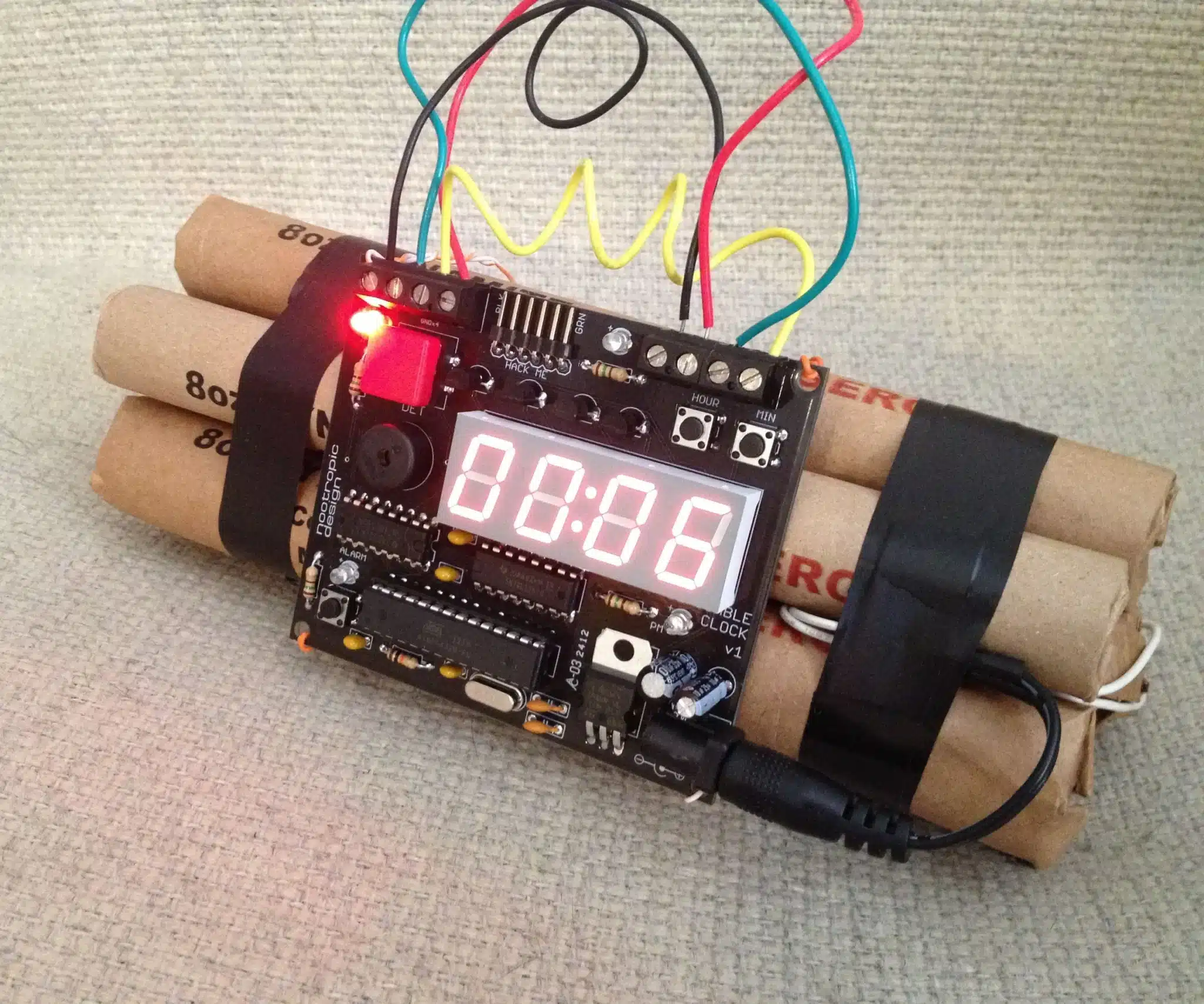
12. The loop is restated in the register of satire, with the stick of dynamite from the page's image speaking, and the register is disclosed: the characterizations are satire, and the mechanism beneath each sentence is stated as fact at sections 1 through 9.
12.1 The register is disclosed before the passage, per this site's practice on TCP: The Master of Disaster: what follows is satire in the voice of the Frame Relay burst, the 384 kilobits of the 1.3 example above the 128 kilobit Committed Information Rate, and every mechanical claim inside it, the Discard Eligible bit, the preferential discard under congestion, TCP's exponential backoff, the application timer, and the retry, is the mechanism of sections 1 through 9, the dates and the cure are those of section 8, and the closing sentence is the ruled verdict of Mark Nichols seated at Article 6 of The Governing Definitions and Controlling Facts of marknichols.com.
12.2 "Ladies and gentlemen of the enterprise, I am your Frame Relay burst. I come free with your Committed Information Rate, I am the extra 384 kilobits the salesman circled on the brochure, and I am wired to a clock. The clock is not mine; the clock belongs to your SSL handshake, and it started when you clicked Buy. Here is my promise: for the next five seconds I will carry your packets faster than you paid for, provided nobody else in the cloud is doing the same thing, which they are, because they got the same brochure. At the first sign of congestion the switch reads the little bit the carrier stapled to my forehead, Discard Eligible, and it does what the bit says, and your packets go wherever discarded packets go, which is nowhere. TCP, loyal to the end, notices the silence and sends them again, slower, and then again, slower still, apologizing in exponential backoff while your handshake's clock runs out. The handshake dies. Your customer, a patient person, clicks Buy again. I am a stick of dynamite with a retry button. The carrier calls this a feature. Mark Nichols called it a trap, bought the circuits outright, and cut my wire in 1996, and I have been sitting in this picture ever since, fuse dry, waiting for someone to sell oversubscription to a bank again. They will. They always do. Nice app, if you're getting bombed."