Merchant Transport: Mark Nichols 1996 Pivot to Tier-0 Network Architecture and the Globalization of eCommerce
In 1996, my plan to build the Modern Internet, the first Tier-0, eCommerce grade network to support Merchant Transport over the Internet that was publicly accessible, media streaming capable, employing a media layer riding above the host layer, with enforceable quality of service guaranteeing sub-300ms round-trip performance globally, SSL and QoS native, 100% uptime, 100% reserved capacity end to end, and reaching ≈99% of the world's Internet users on a single hop, looked completely irrational to the legacy and incumbent carriers and ISPs, all of them, worldwide.
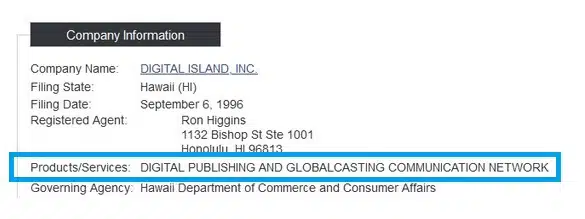
Preamble: I want this point to be clear, there is no “Digital Island” without Ron Higgins first framing his conceptual Smartvision concept as a Pacific Rim, publishing, and translation services company. Even though Ron's telecom framing opportunity for Smartvision was patently false, and he was completely unhinged for purposefully and knowingly misleading people with it, it was the start of our dialogue. See this link for more detailed information: Ron Higgins and the Hawaii Fiber Access Misstatements.
But there is also no “Digital Island” as the company that we actually built without the two pivots, Merchant Transport and Tier-0 Networking, that I, Mark Nichols, introduced: first, expanding the scope from Pacific Rim to global, and second, changing the business model from publishing and translation to enabling the globalization of eCommerce infrastructure. This point needs to be more than clear, those two contributions by me are the foundational architecture, both network and product services, of everything on this site to which everyone in the company worked too. Those statements of facts are not disputable.
The original network diagrams were hand-drawn by me in June 1996, then redrawn in CAD in October before the company had its first customer, Cisco Systems, which I signed in November into a $300,000 binding contract to host cisco.com. My CAD network drawing was attached as an addendum to the Cisco service agreement. Every engineer, architect, and team member who followed built on those genesis network designs.
Ron’s original concept created the starting point. My two pivots changed what the company became. The Digital Island that signed Cisco Systems, attracted Cliff Higgerson of ComVentures’ seed funding, supported the angel, first, second, and third funding rounds, and ultimately moved toward the NASDAQ IPO was not a Pacific Rim translation company. It was the global eCommerce infrastructure company that emerged after Ron and I worked through the company’s actual founding definition together.
This page explains those two pivots:
The first pivot changed the geographic scope of the opportunity. The second pivot changed the business model itself. Together, they moved Digital Island from a Pacific Rim-focused publishing and translation concept into a global Merchant Transport and eCommerce infrastructure company. Those changes enabled the first customer contract with Cisco Systems and helped make the company fundable as a global network business.
1. The first pivot changed the scope.
2. The second pivot changed the business model.
Pivot 1, in June of 1996, was my suggestion to change the concept from a Pacific Rim-only publishing and translation idea to a worldwide opportunity.
In Pivot 2, in September 1996, I moved the concept from publishing and translation to Merchant Transport and browser-based transactions to enable the globalization of eCommerce. That pivot stands in September. What followed after that was not a new pivot. It was the work of financial modeling, internal buy-off, customer price validation, and execution.
These distinctions matter because they explain how an early idea turned into a network, a customer base, and eventually a public company.

What I meant by Merchant Transport: In telecom, transport means the end-to-end movement of traffic across a managed path, while transit usually refers to only one segment or one carrier’s portion of the route. By Merchant Transport, I meant the end-to-end movement of a commercial transaction across the network, not just content delivery. The idea was to support browser-based financial transactions with the performance, reliability, and control needed to make remote commerce work at global scale.
That email is the clearest documentary marker of the second pivot in motion. By September 18, 1996, the concept had already moved from private discussion into the company’s active product and messaging conversation. The company was no longer confined to publishing and translation. It was moving toward Merchant Transport, browser-based transactions, and the infrastructure required to support global electronic commerce.
To understand why that September pivot mattered so much, it helps to step back to the earlier concept and the first pivot that came before it.
Pivot 1: In June 1996, the Scope Changed from Pacific Rim Only to Global
When I first became involved, Ron’s concept was centered on a Digital Publishing Service in the Pacific Rim. The idea was to use Hawaii as a favorable location for Pacific Rim-facing publishing and translation services.
That original framing was too narrow.
After I completed network due diligence, it became clear that limiting the build to the Pacific Rim did not create the economic advantage Ron believed it would. The cost structure for the initial Frame Relay design did not justify a Pacific Rim-only strategy. In practical terms, if we were going to build the network at all, we could reach beyond the Pacific Rim and pursue Europe, Latin America, and other major markets without a meaningful increase in relative cost.
That realization changed the business opportunity immediately. What had been framed as a regional publishing and translation concept became a worldwide translation and content distribution opportunity. That was the first pivot.

The pricing records from that period help explain why the first pivot occurred. Services in Pacific Rim locations such as Japan were not materially cheaper than comparable domestic U.S. or European points of presence. The same pattern appeared at equivalent capacities. T-1 pricing was in the same range across locations such as London, Tokyo, and Paris, and lower-capacity ports also fell into the same general ballpark across Singapore, Korea, Israel, Moscow, and Australia.
That meant there was no compelling financial reason to keep the business limited to a Pacific Rim-only footprint. Thus, the initial proposed business of translation services from Pacific Rim-centric languages (Cantonese, Mandarin, Japanese, Korean, Malay, Tamil, etc.) could now be expanded to include languages from global regions (Spanish, French, German, Russian, Hebrew, Dutch, etc.).
Once that became clear, the proper opportunity was global, not regional. This exemplifies the human element of how Ron and I worked together to refine strategy and market opportunity. Ron instigated the opportunity in the Pacific Rim and I initiated the financial, technical, and business opportunity for global.


These Frame Relay pricing schedules reflect the assumptions of the earliest business model. They are useful because they explain both the starting point and its limits. Once the economics were properly understood, the Pacific Rim-only framing gave way to a worldwide opportunity.

Pivot 2: In September 1996, the Business Model Changed from Digital Publishing to eCommerce
The second pivot occurred in September 1996.
This was the more consequential pivot because it changed not just the geography of the business, but the product, the network requirements, the economics, and the future customer base.
What began as translation and digital publishing evolved into Merchant Transport and browser-based transactions. In the second week of September 1996, during my visit to Hawaii with Ron and Sanne, I walked Ron through a concrete product outline for a virtual merchant transaction service delivered through a web page.
The concept was simple and powerful. Our network would allow website operators to process electronic funds through a secure virtual credit card merchant terminal in the browser. That removed the dependence on physical terminals, dedicated phone lines, fragile integrations, and the geographic and operational limitations that constrained remote transactions at the time.
This was not a minor refinement. It was a change in business model.
The company was no longer just about publishing and translation. It was now moving toward enabling Internet-based financial services and eCommerce at global scale. That was the second pivot.
The pivot date remains September 1996.
What followed in the weeks and months after that was the financial and operational work needed to support the pivot. I still had to do the financials. The finance side had to buy off on whether customers would pay the premium required by the higher-performance network model. The architecture had to be validated. The operating plan had to be executed.
Pivot 2 Changed the Network Requirements, and Frame Relay Gave Way to International Private Line Circuits
Pivot 2 changed the technical requirements immediately.
A Frame Relay model could support the earlier publishing and translation assumptions, but it was not the right long-term architecture for what Merchant Transport required. Secure browser-based financial transactions demanded stronger control over latency, reliability, and quality of service across international paths.
That is why the business moved toward International Private Line Circuits (IPLCs).
The move to IPLCs was not a separate pivot. It was the technical and economic consequence of the September pivot. Once the company committed to Merchant Transport as the direction, the network had to evolve accordingly. The later work was about proving the economics, confirming that customers would pay for the premium, and then building it.
A page that arrives late still arrives, and a transaction that arrives late is dead: Merchant Transport, proposed by Mark Nichols in September 1996 and documented in the email of September 18, 1996 from Sanne Higgins shown above, required reserved capacity with no discard-eligible packets, and that requirement retired Frame Relay from Digital Island's design within thirty days of DIGITAL ISLAND DRAFT.2 of October 1996 and put clear-channel International Private Line Circuits and CBR ATM switching in its place under AS6553, issued August 29, 1996, the architecture Cisco Systems contracted for on November 7 and 8, 1996 and the architecture the Modern Internet runs on. Frame Relay had been adequate for the business described in the Digital Island business plan of July 5, 1996 shown above, a Pacific Rim digital publishing and translation service delivering pages, and it was not adequate for the hosting of cisco.com under enforceable performance terms, including the delivery of Cisco IOS software images of approximately 16 megabytes in single uninterrupted sessions to Singapore, Moscow, and Tel Aviv, because every Frame Relay frame past the committed information rate carried a Discard Eligible bit that made a stall past the 2000ms Event Horizon a matter of carrier design. The three drawings, and the reason the third was superseded, stand at The Genesis Global Network Diagrams of the Modern Internet by Mark Nichols.
The Genesis sketch shows the initial concept. The map below shows the later IPLC network we actually built once the September pivot was financially validated and executed.

The Pivots Moved the Company from Concept to Customers Within Roughly Six Months
The importance of the second pivot became visible quickly in the company’s customer trajectory.
Within roughly six months of the September 1996 pivot, Visa International became the third customer, after Cisco Systems and Stanford University as the first and second clients. Soon after, E*TRADE, Charles Schwab, and MasterCard joined the network.
That sequence reflects the significance of what changed. The company did not remain a publishing and translation business. It moved into the infrastructure required for global commercial transactions.
The Pivots Moved the Company from Concept to Customers Within Roughly Six Months
The importance of the second pivot became visible quickly in the company’s customer trajectory.
Within roughly six months of the September 1996 pivot, Visa International became the third customer, after Cisco Systems and Stanford University as the first and second clients. Soon after, E*TRADE, Charles Schwab, and MasterCard joined the network.
That sequence reflects the significance of what changed. The company did not remain a publishing and translation business. It moved into the infrastructure required for global commercial transactions.
These Two Pivots Explain the Real Early Formation of the Company
Pivot 1 changed the scale of the opportunity. It took a Pacific Rim-only idea and opened it to a worldwide market.
Pivot 2 changed the nature of the company. It took a publishing and translation concept and redirected it toward Merchant Transport, browser-based transactions, and the network architecture required to support the globalization of eCommerce.
That is the story these documents preserve.
They show how the business evolved through human interaction, technical due diligence, product invention, financial reality, and execution. They show who changed the concept, when the pivots occurred, and how those pivots moved the company from idea to infrastructure, from infrastructure to customers, and from customers toward the public-company path.
The Founding of Digital Island Divides into Ron Higgins' Concept and the Company the Pivots Built
The "Digital Island" that became a global eCommerce infrastructure company was the "Digital Island" envisioned by the scope and business model suggestions of Mark Nichols.
The "Digital Island" that was proposed in concept by Ron Higgins in May of 1996 is not the "Digital Island" that signed Cisco Systems to a global eCommerce contract, nor what Cliff Higgerson funded in the seed and subsequent capital investments at ComVentures.
There was Ron's "Pacific Rim Translation and Digital Publishing Digital Island" based upon a false Honolulu fiber optic ruse, and then there was the real "Global eCommerce Powerhouse Digital Island" after Ron and Mark started collaborating on the project together.
Note to Stanford and Harvard Business Schools: Your case studies about Digital Island are materially false and misleading.
Why This Matters: The Network That Enabled the Globalization of eCommerce Was the California-Hubbed IPLC Build, Not the Hawaii Concept
The Digital Island we built was not Ron’s Digital Island AsiaPac translation-services concept proposed on a Hawaii-hubbed fiber-optic Frame Relay network. That network did not exist.
The Digital Island network that enabled the globalization of eCommerce was the California-hubbed global IPLC network built to scale the Merchant Transport services model proposed by Mark Nichols.
External Cisco Corroboration: The 1996 Agreement and the 1998 Cisco Release Validate the Model
The executed 1996 Cisco agreement proves the original customer relationship and contract timing. The 1998 Cisco newsroom release proves Cisco later publicly validated the technical model: Cisco Powered Network, IOS, Internet Applications Engine, electronic commerce, global overnet, high-performance services, and performance guarantees.
The Litmus Test of Architectural Exclusivity: Cisco Would Not Have Handed cisco.com to a Three-Person Hawaii Startup if Any Carrier on Earth Could Deliver the Same
To cut through the historical revisions, one must ask the structural question: Would Cisco, the most technically sophisticated networking corporation on Earth, have handed the hosting of cisco.com over to a three-person startup in Hawaii in November of 1996 if any other telecommunications carrier on Earth could deliver what I, Mark Nichols, proposed? The answer is an absolute corporate and operational no.
In 1996, the global telecom landscape was structurally broken. Legacy monopolies (Sprint, France Telecom, Japan Telecom) were physically restricted to localized geographic footprints. They forced traffic through fragmented, oversubscribed cross-border pipelines that inherently choked on secure, high-payload transactions.
Cisco did not sign that $300,000 agreement as a speculative experiment or a casual favor. They signed because Digital Island’s unified, deterministic Tier-0 architecture was the only operational blueprint on the planet designed to bypass legacy carrier bottlenecks and guarantee repeatable, end-to-end global Quality of Service (QoS). The November 1996 executed contract by Mark Nichols remains the unassailable empirical proof: software protocols were commercially inert until we built the private physical infrastructure required to scale them.
https://marknichols.com/cisco-systems-remote-data-services-agreement/


Opinion Rules: You are visiting my record, and I am the subject matter expert on it. If you are a subject matter expert too, I want to hear from you: bring your document and I will answer it on the record. If you are not, you are welcome here to read and to learn. The documented-challenge terms of marknichols.com and the condition on opinion are stated at F40 of The Governing Definitions and Controlling Facts of Telecommunications Internetworking, and they govern this page.