Open Letter to Stanford University:
Retract the “Birth of the Internet” Plaque
Stanford’s plaque makes a false claim of origin. An operational internet already existed in 1973 using NCP, before TCP was proposed, demonstrated, formalized, or adopted.
Stanford University should retract the plaque titled “Birth of the Internet.”
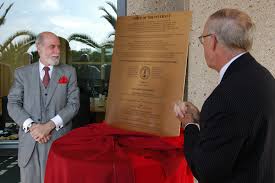
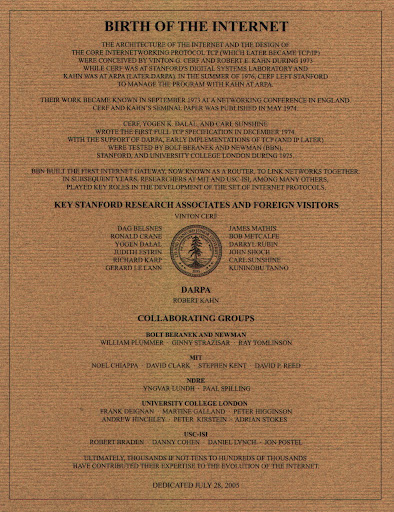
This request is not made to diminish Stanford’s real contributions to Internet architecture and TCP/IP development. Those contributions are substantial and deserve recognition. The problem is that the plaque asserts a false claim of origin, and false public history should not be preserved simply because it is prestigious, familiar, or convenient.
An operational internet, meaning a network-of-networks, already existed in 1973. Independent networks were already interconnected across national and administrative boundaries and were exchanging real traffic using NCP. That happened before TCP was proposed in 1974, before the TCP/IP demonstration in 1977, before UDP in 1980, before TCP’s formal specification in 1981, and before the ARPANET transition to TCP/IP in 1983.
That sequence matters.
The Internet came first.
TCP came later.
TCP did not create the Internet. TCP added a later transport option for packet assurance across an already existing internet. It was useful. It was important. But usefulness is not birth, and importance is not origin. A protocol used within a system is not the same thing as the system itself.
Then came UDP in 1980, further showing that TCP’s reliable, ordered, retransmission-based behavior was poorly suited for many forms of packet internetworking where timeliness mattered more than perfect sequencing. Voice, live audio, live video, video conferencing, live sports, live music events, multiplayer gaming, telemetry, control signaling, sensor data, market data, and astronaut-to-ground communications all make the point plainly. In many of those cases, a late packet is less useful than a lost packet.
That alone should end the mythology that TCP somehow was the Internet.
The Internet is the system.
TCP was one later transport option inside it.
UDP later proved TCP was not the sole, final, or universally superior answer.
For those reasons, Stanford’s plaque should be retracted.
What the Plaque Gets Wrong
The plaque makes a broad headline claim: “Birth of the Internet.”
Its body text then distributes that claim across several different categories: conception, architecture, protocol design, implementation, demonstration, collaboration, and later evolution. That structure gives the plaque prestige up front and ambiguity underneath. If challenged, defenders can retreat into softer positions such as:
- “We meant the architecture.”
- “We meant Stanford’s contribution.”
- “We meant the work that later influenced the Internet.”
Those fallback positions do not save the headline.
The issue is not whether Stanford contributed important work. It did.
The issue is whether Stanford-linked protocol work during the 1970s can correctly be called the birth of the Internet.
It cannot.
The Central Error
The plaque collapses distinct historical events into a single origin story.
Those events are not the same:
- the first operational existence of a network-of-networks
- the conception of a later architecture
- the design of a later protocol suite
- the demonstration of that suite
- the later standardization and adoption of that suite
Once those categories are separated, the plaque weakens quickly.
A later architecture is not the first existence of the system.
A later protocol is not the substrate it runs on.
A demonstration is not a birth.
Adoption is not a beginning.
What an Internet Is
An internet is a network-of-networks.
A network-of-networks exists when two or more independent networks are interconnected and exchange traffic.
Internetworking is the interconnection of independent networks that exchange traffic.
A protocol is a method used within a system.
A protocol is not the system itself.
That distinction is decisive. A protocol can improve an internet. It can help standardize behavior. It can become widely used. But it remains a method used inside a larger system. It is not identical to the existence of that system.
What Already Existed in 1973
By mid-1973, ARPANET had established a satellite connection to the NORSAR network in Norway. In July 1973, a system at University College London exchanged packets with ARPANET hosts in the United States. These were independent network systems operating across different institutions, administrations, and countries. Data moved between them. Host-to-host communication in that period used NCP.
That means the essential condition had already been met. Independent networks were interconnected and exchanging real traffic. That is a network-of-networks. That is an internet. The system already existed.
For shorthand, this page refers to that 1973 operational internetwork as Internet Alpha. The term is analytical shorthand only. It simply names the fact that a functioning internetwork was already alive before the later TCP/IP milestones Stanford tries to fold into a birth narrative.
Internet Alpha was operational.
It carried real traffic.
It connected independent networks.
It used NCP.
What Came Later
The concept of TCP was first described in 1974.
The TCP/IP suite was demonstrated in 1977 across ARPANET, SATNET, and PRNET.
UDP was defined in 1980.
TCP was formalized in 1981.
ARPANET did not transition from NCP to TCP/IP until January 1, 1983.
That timeline matters because it destroys the birth claim.
The Internet did not first exist when TCP was proposed in 1974.
It did not first exist when TCP/IP was demonstrated in 1977.
It did not first exist when UDP appeared in 1980.
It did not first exist when TCP was formalized in 1981.
It did not first exist on 1983 Flag Day.
Those were later protocol milestones inside a domain that already existed as an operational internetwork.
Why the Plaque Fails Under Every Reading
If Stanford means the 1977 TCP/IP demonstration
Then the claim is false because an operational internet already existed in 1973 using NCP. A later demonstration cannot be the birth of a system that already exists.
If Stanford means the 1973 conception or design work
Then the claim is still false because conception of a protocol or architecture is not the birth of the system itself. Conception is not operational existence. Proposal is not birth. Design is not birth.
If Stanford means Stanford’s broader contribution to later protocol development
That still fails as a birth claim. Later protocol work inside an existing system is not the same thing as the origin of that system. TCP was only one later transport option inside an already existing internet, and UDP’s later rise further proved TCP was not the sole, final, or universally superior answer for packet internetworking.
Protocol Is Not System
This is the core technical mistake.
TCP is a protocol.
UDP is a protocol.
Protocols are methods used within a system.
An internet is a system composed of interconnected networks.
Therefore, a protocol is not the same thing as an internet.
TCP provided one later transport option. It was useful for packet assurance across an already existing internet. But usefulness is not birth, and importance is not origin.
Even TCP was not the final or universal answer. Many reasons people actually use the Internet involve timely communication, not perfect sequencing and retransmission. That includes:
- voice calls
- live audio
- live video
- video conferencing
- live sports streams
- live music events
- multiplayer gaming
- telemetry
- control signaling
- sensor data
- market data feeds
- astronaut-to-ground communications
- other real-time, latency-sensitive traffic
In many of those cases, a late packet is less useful than a lost packet.
People use the Internet for many things TCP is poorly suited to carry well. That makes it illogical to equate TCP with the Internet itself.
Dependency Alone Defeats the Origin Claim
TCP/IP was designed to operate across multiple networks.
That means TCP/IP presupposed the existence of those networks.
A protocol designed to work across multiple networks depends on a system of multiple networks already being there as its operating condition.
A method that depends on a system cannot constitute the creation of that system.
That is not rhetoric. It is basic logic.
If there were no network-of-networks, there would be nothing for an internetwork protocol to internetwork. Even on Stanford’s most generous reading, TCP/IP is downstream of the condition it claims to have created.
The Common Defenses, and Why They Fail
“The plaque is broadly accurate”
No. That defense relies on ceremony instead of precision. The plaque uses the word birth. Birth is not a vague compliment. Birth is the moment a system first exists in operational form. If an internet already existed in 1973, assigning birth to later Stanford-linked protocol work is inaccurate.
“TCP/IP created internetworking”
No. Internetworking occurred in 1973 using NCP. TCP/IP improved internetworking. It did not create it.
“The 1973 system was only an intranet”
No. The 1973 ARPANET, NORSAR, and UCL configuration linked independent networks across separate institutions, administrations, and countries. That is internetworking, not a single enclosed network.
“The earlier systems were too small or experimental”
That does not matter. Size is not the criterion for existence. Function is. If independent networks exchanged real traffic, the system existed.
“TCP/IP defines the Internet”
No. TCP/IP is one method used within an internet. An internet existed without TCP/IP. That alone defeats the claim that TCP/IP is the condition of the Internet’s existence.
“Birth is metaphorical”
The plaque presents itself as a factual historical marker. It names institutions, people, and dates. That is a historical claim, not a poem. Historical claims must be judged as true or false.
“The plaque refers to the architecture, not the first operational internet”
Then it is misworded. It should say conception of a later architecture, not birth of the Internet. Architecture is one thing. Operational existence is another. Stanford does not get to blur them and then claim accuracy through vagueness.
What Stanford Does Deserve Credit For
Stanford deserves credit for major work in Internet architecture and TCP/IP development. That is not in dispute.
What is in dispute is overreach.
A plaque can honor important protocol work without falsely claiming the birth of the Internet. A university marker can commemorate a major contribution without collapsing an already existing operational internetwork into a later Stanford-centered origin myth.
The current plaque does not merely honor contribution.
It claims origin.
That is the error.
Findings
An internet existed in 1973.
That 1973 internetwork carried real traffic across independent networks.
It used NCP.
TCP was described later, in 1974.
TCP/IP was demonstrated later, in 1977.
UDP appeared later, in 1980.
TCP was formalized later, in 1981.
ARPANET transitioned from NCP to TCP/IP later, in 1983.
TCP/IP was a later protocol suite used within an already existing internet.
TCP was an important later transport option, not the birth of the system itself.
Final Determination
Stanford’s plaque is historically inaccurate, technically unsound, and logically defective.
Its headline claim confuses the existence of an operational network-of-networks with the later conception, design, demonstration, and adoption of protocol mechanisms used within such a system.
An internet existed in 1973.
TCP/IP came later.
TCP/IP improved internetworking.
TCP/IP did not create the Internet.
Petition for Correction
Stanford University should do three things.
1. Retract the plaque
The current plaque should be removed because its headline claim is false.
2. Correct the historical record
Stanford should publicly acknowledge the distinction between:
- the existence of an operational internet in 1973 using NCP
- later Stanford-linked work on Internet architecture and TCP/IP
- later demonstrations, standardization, and adoption
Those are different things. They should not be merged into a single birth narrative.
3. Replace the plaque with accurate language
Stanford can still honor its real contribution without making a false origin claim.
A corrected version could say:
Stanford University was an important center in the development of Internet architecture and the design of the TCP/IP protocol suite during the 1970s. By that time, operational internetworking among independent networks had already been established using NCP. TCP/IP represented a subsequent development that improved and helped standardize communication across those existing networks. It did not mark the birth of the Internet.
Bottom Line
The plaque’s wording is broad enough to claim origin and vague enough to invite retreat when challenged. That is exactly why it has to be read strictly.
Once read strictly, it collapses.
The historical record supports a simple conclusion: the Internet existed before the TCP/IP milestones associated with Stanford. The plaque does not commemorate the birth of the Internet. It commemorates a significant later contribution to protocol development and wrongly elevates that contribution to the status of origin.
Retract the plaque. Correct the record. Honor the contribution without falsifying the origin.