Two Foundational Pivots to Globalization and eCommerce
This page documents two early pivots that changed Digital Island from a regional digital publishing concept into the foundation for a global eCommerce infrastructure company.
- The first pivot changed the scope.
- The second pivot changed the business model.
Pivot 1 moved the concept from a Pacific Rim-only publishing and translation idea to a worldwide opportunity.
Pivot 2, in September 1996, moved the concept from publishing and translation to Merchant Transport and browser-based transactions. That pivot stands in September. What followed after that was not a new pivot. It was the work of financial modeling, internal buy off, customer price validation, and execution.
These distinctions matter because they explain how an early idea turned into a network, a customer base, and eventually a public company.
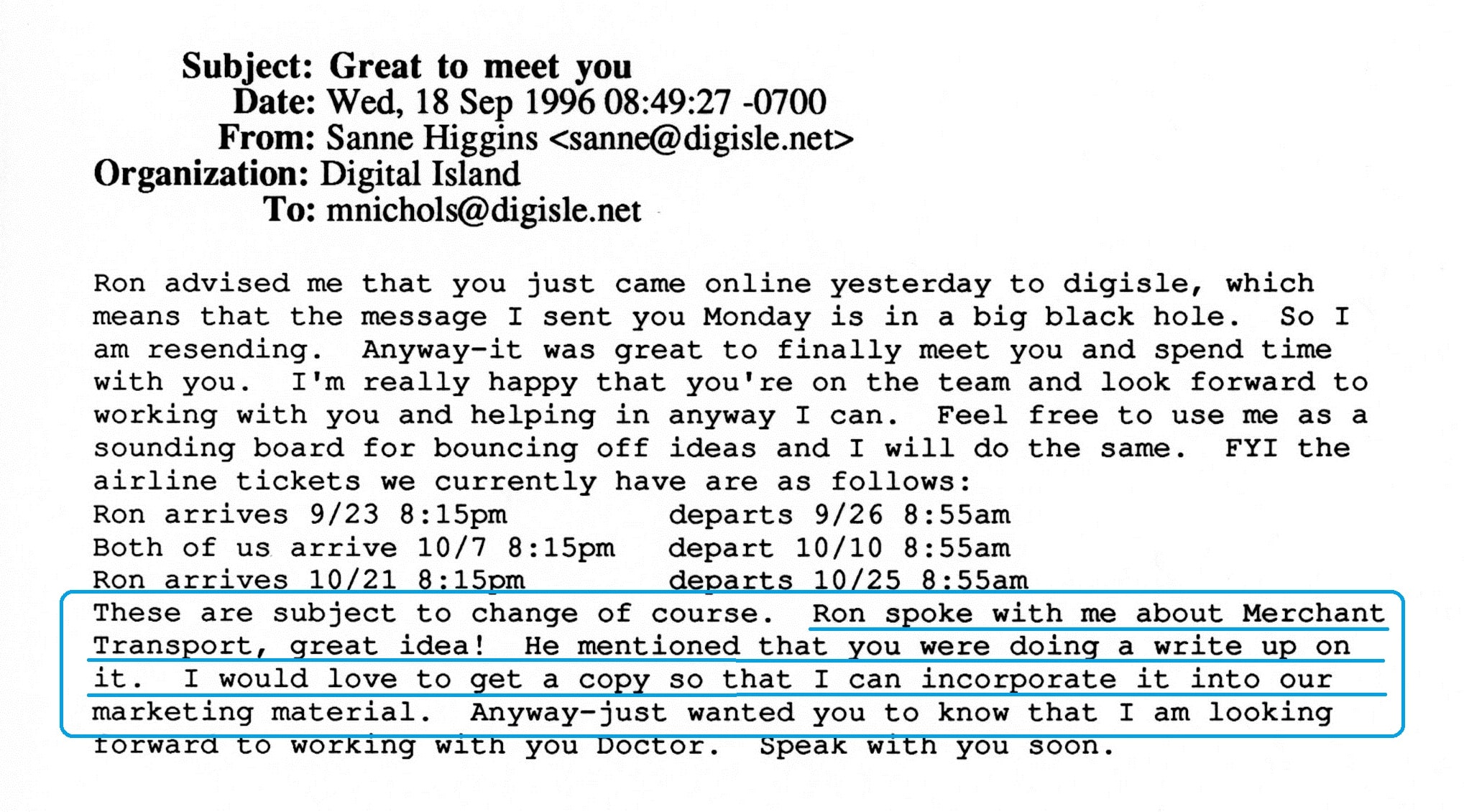
What I meant by Merchant Transport: In telecom, transport means the end-to-end movement of traffic across a managed path, while transit usually refers to only one segment or one carrier’s portion of the route. By Merchant Transport, I meant the end-to-end movement of a commercial transaction across the network, not just content delivery. The idea was to support browser-based financial transactions with the performance, reliability, and control needed to make remote commerce work at global scale.
That email is the clearest documentary marker of the second pivot in motion. By September 18, 1996, the concept had already moved from private discussion into the company’s active product and messaging conversation. The company was no longer confined to publishing and translation. It was moving toward Merchant Transport, browser-based transactions, and the infrastructure required to support global electronic commerce.
To understand why that September pivot mattered so much, it helps to step back to the earlier concept and the first pivot that came before it.
Pivot 1: From Pacific Rim Only to Global
When I first became involved, Ron’s concept was centered on a Digital Publishing Service in the Pacific Rim. The idea was to use Hawaii as a favorable location for Asia-facing publishing and translation services.
That original framing was too narrow.
After I completed network due diligence, it became clear that limiting the build to Asia did not create the economic advantage Ron believed it would. The cost structure for the initial Frame Relay design did not justify a Pacific Rim-only strategy. In practical terms, if we were going to build the network at all, we could reach beyond Asia and pursue Europe, Latin America, and other major markets without a meaningful increase in relative cost.
That realization changed the business opportunity immediately. What had been framed as a regional publishing and translation concept became a worldwide translation and content distribution opportunity. That was the first pivot.
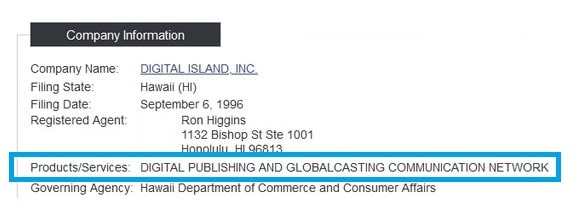

The pricing records from that period help explain why the first pivot occurred. Services in Pacific Rim locations such as Japan were not materially cheaper than comparable domestic U.S. or European points of presence. The same pattern appeared at equivalent capacities. T-1 pricing was in the same range across locations such as London, Tokyo, and Paris, and lower-capacity ports also fell into the same general ballpark across Singapore, Korea, Israel, Moscow, and Australia.
That meant there was no compelling financial reason to keep the business limited to a Pacific Rim-only footprint.Thus, the initial proposed business of translation services from Pacific Rim-centric languages (Cantonese, Mandarin, Japanese, Korean, Malay, Tamil, etc), could now be expanded to include languages from global regions (Spanish, French, German, Russian, Hebrew, Dutch, etc.)
Once that became clear, the proper opportunity was global, not regional. This exemplifies our human element of how Ron and I worked together to refine strategy and market opportunity. Ron instigated the opportunity in the Pacific Rim and I initiated the financial, technical, and business opportunity for global.
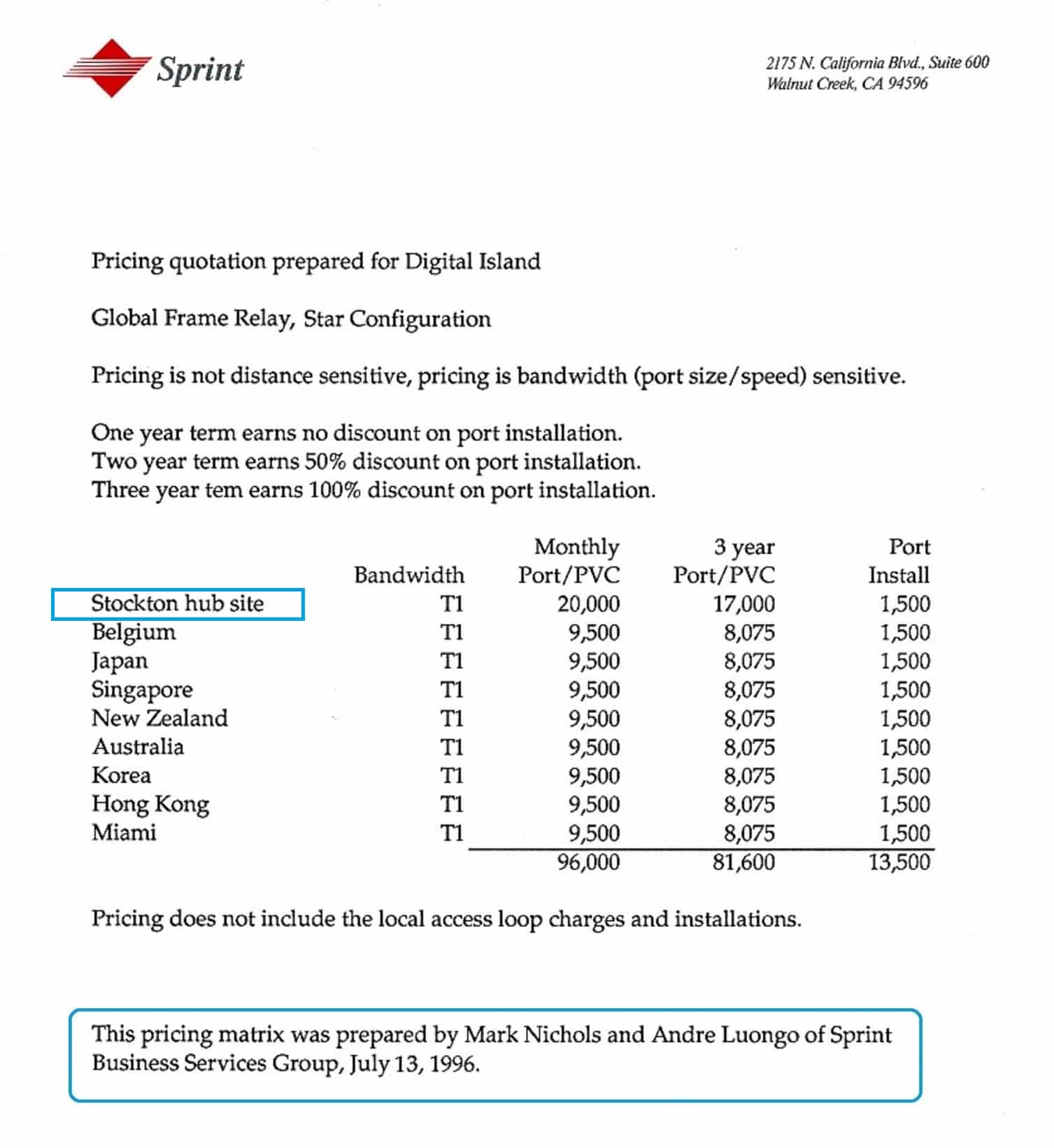
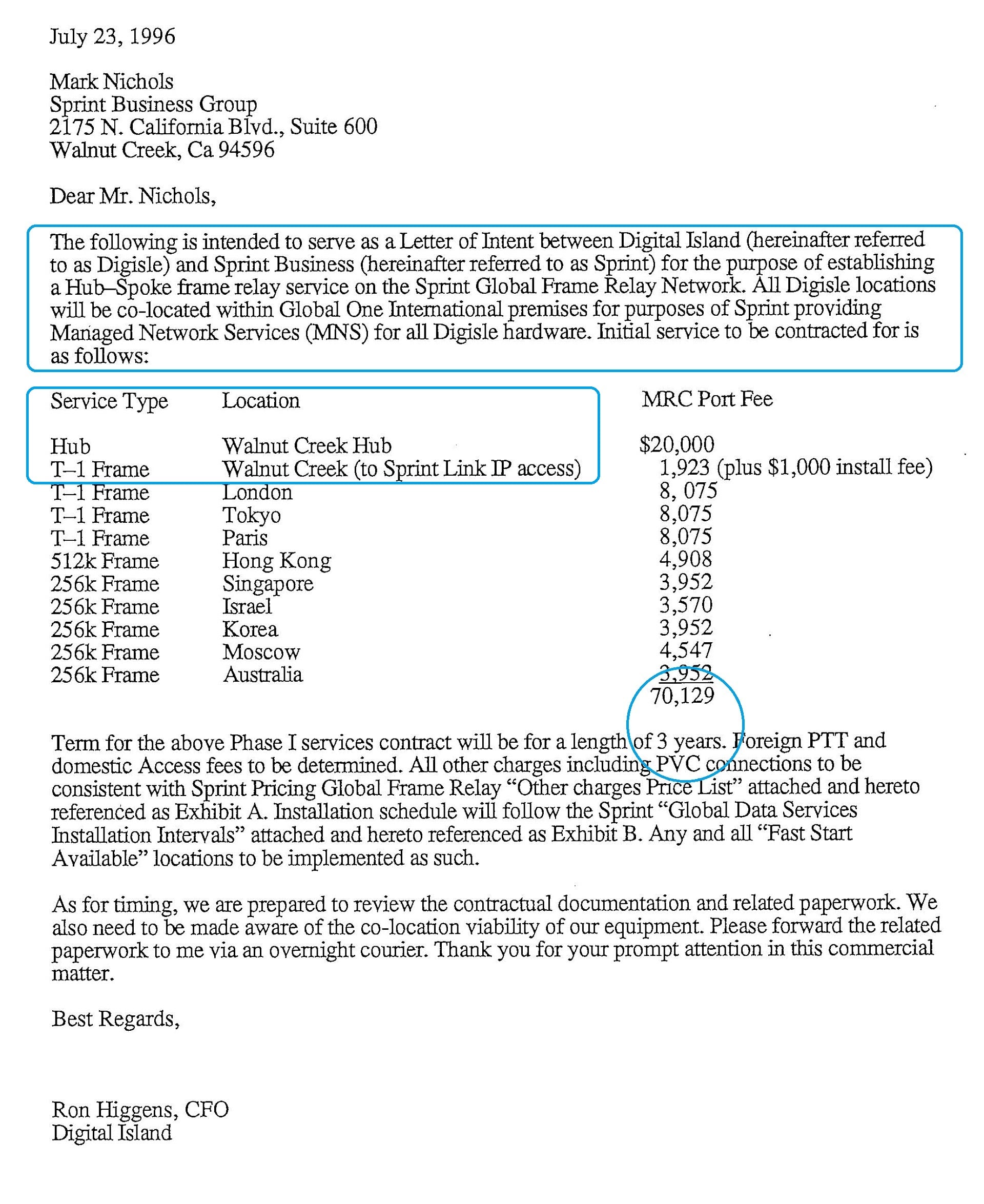
These Frame Relay pricing schedules reflect the assumptions of the earliest business model. They are useful because they explain both the starting point and its limits. Once the economics were properly understood, the Pacific Rim-only framing gave way to a worldwide opportunity.

Pivot 2: From Digital Publishing to eCommerce
The second pivot occurred in September 1996.
This was the more consequential pivot because it changed not just the geography of the business, but the product, the network requirements, the economics, and the future customer base.
What began as translation and digital publishing evolved into Merchant Transport and browser-based transactions. In the second week of September 1996, during my visit to Hawaii with Ron and Sanne, I walked Ron through a concrete product outline for a virtual merchant transaction service delivered through a web page.
The concept was simple and powerful. Our network would allow website operators to process electronic funds through a secure virtual credit card merchant terminal in the browser. That removed the dependence on physical terminals, dedicated phone lines, fragile integrations, and the geographic and operational limitations that constrained remote transactions at the time.
This was not a minor refinement. It was a change in business model.
The company was no longer just about publishing and translation. It was now moving toward enabling Internet-based financial services and eCommerce at global scale. That was the second pivot.
That email matters because it shows the pivot in motion. By September 18, 1996, the concept had already moved from private discussion into the company’s active product and messaging conversation.
The pivot date remains September 1996.
What followed in the weeks and months after that was the financial and operational work needed to support the pivot. I still had to do the financials. The finance side had to buy off on whether customers would pay the premium required by the higher-performance network model. The architecture had to be validated. The operating plan had to be executed.
But none of that changes the pivot date.
The decision and change in direction happened in September. The work that followed was finance, validation, and execution.
Why Pivot 2 Changed the Network
Pivot 2 changed the technical requirements immediately.
A Frame Relay model could support the earlier publishing and translation assumptions, but it was not the right long-term architecture for what Merchant Transport required. Secure browser-based financial transactions demanded stronger control over latency, reliability, and quality of service across international paths.
That is why the business moved toward International Private Line Circuits.
The move to IPLCs was not a separate pivot. It was the technical and economic consequence of the September pivot. Once the company committed to Merchant Transport as the direction, the network had to evolve accordingly. The later work was about proving the economics, confirming that customers would pay for the premium, and then building it.
The Genesis sketch shows the initial concept. The map below shows the later IPLC network we actually built once the September pivot was financially validated and executed.

From Concept to Customers
The importance of the second pivot became visible quickly in the company’s customer trajectory.
Within roughly six months of the September 1996 pivot, Visa International became the third customer, after Cisco Systems and Stanford University as the first and second clients. Soon after, E*TRADE, Charles Schwab, and MasterCard joined the network.
That sequence reflects the significance of what changed. The company did not remain a publishing and translation business. It moved into the infrastructure required for global commercial transactions.
Why These Two Pivots Matter
These two pivots explain the real early formation of the company.
Pivot 1 changed the scale of the opportunity. It took a Pacific Rim-only idea and opened it to a worldwide market.
Pivot 2 changed the nature of the company. It took a publishing and translation concept and redirected it toward Merchant Transport, browser-based transactions, and the network architecture required to support the globalization of eCommerce.
That is the story these documents preserve.
They show how the business evolved through human interaction, technical due diligence, product invention, financial reality, and execution. They show who changed the concept, when the pivots occurred, and how those pivots moved the company from idea to infrastructure, from infrastructure to customers, and from customers toward the public-company path.